
About forty years ago, when I began learning the tombak, I was fortunate enough to experience playing lightweight instruments fitted with thin goatskin or deerskin heads. My first tombak was lent to me by my first teacher, who had been a student of Hossein Hamdanian. I kept that instrument for a little over a year, and I still remember every detail of it. At the time, I was living in Zahedan, where it was almost impossible to find or buy a tombak. Later, in Tehran, I bought a tombak made by Delshad directly from him at Baharestan, the city's famous musical-instrument market; I still own it. A few years later, when I moved to Tehran in the late 1980s, Baharestan Square and its music market became my regular haunt, a place I visited day after day and week after week. For roughly another decade, lightweight tombaks without a reinforcing rim and with goatskin heads could easily be found there. I purchased many of the finest instruments in my present collection from that market during those years.
The first heavy tombak with a thick skin that I encountered was at Jamshid Mohebbi's home in the Gisha neighbourhood of Tehran, in 1992–93. I still own that instrument, too. It was one of his finest creations at the time. To demonstrate its strength, he actually stood on the drumhead to show me what an extraordinary tombak it was. The body was made of ash wood, and the head was calfskin. That very same skin remains on it today and, as the saying goes, has never given me a moment's trouble. Over the following decade, beginning in the early 1990s, many other makers began producing tombaks of this kind. Helmi and Shirani were among the best known. Other names appeared later. Some makers distinguished their instruments through minor modifications, while others developed genuinely distinctive designs. Hemmati certainly belongs among the latter. I did not follow these developments particularly closely, so I cannot claim to have complete information about all these makers, the differences that undoubtedly existed between their instruments, or the features each presumably regarded as characteristic of his own approach and as an advantage over his competitors. (My experience with different types of tombak was largely limited to Tehran, and to a lesser extent Shiraz. I knew little then, and know little now, about the worlds of tombak playing and making in other Iranian cities, especially Isfahan, which subsequently became another major centre of modern tombak making and remains so today. Perhaps instruments of this type had been made there for many years. The only old tombak I encountered in Isfahan belonged to the master Hassan Kassai; at a gathering, it was handed to me so that I could accompany his playing. That instrument, too, was made precisely according to the patterns of the old master craftsmen and had nothing in common with the tombaks now produced in Isfahan.)
Whenever I wandered through Baharestan or visited any other musical-instrument shop I knew in Tehran, I looked for the kind of tombak whose sound I had in my ears. I now own quite a few of these instruments. As the years went by, they became harder and harder to find in Baharestan. I discovered the most recent one in 2017–18, in a second-hand shop on Larestan Street.
Among all the tombaks I acquired were several that could be described as works of master craftsmen: an inlaid tombak bearing the stamp of Hamzeh-Valli; an inlaid tombak formerly belonging to Parvaneh, the celebrated singer of the Qajar era; two tombaks that had belonged to Isa Khan Aqabashi; and several other outstanding old instruments once owned by distinguished tombak players of the First and Second Pahlavi periods. My interest in these instruments also led me to examine many others in private hands, photograph them, and, whenever possible, measure them. In 2009–10, during the restoration of the Abolhassan Saba Museum, I was entrusted with replacing the skin of Saba's tombak, which had become detached. This also gave me the opportunity to photograph and measure that unique instrument.
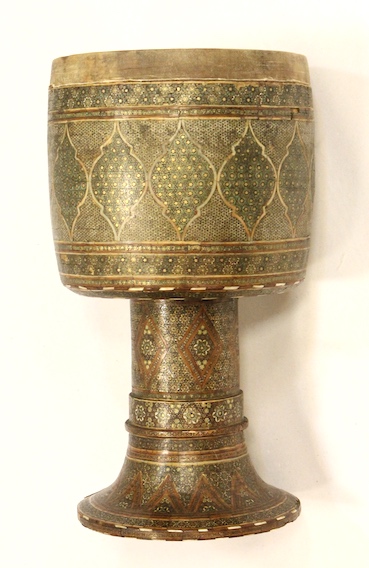
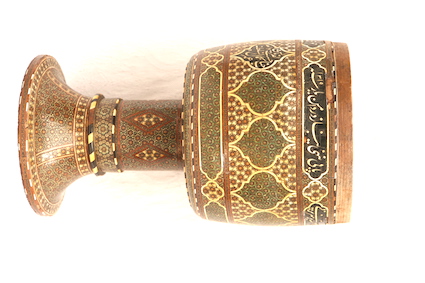
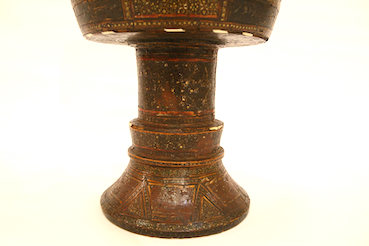
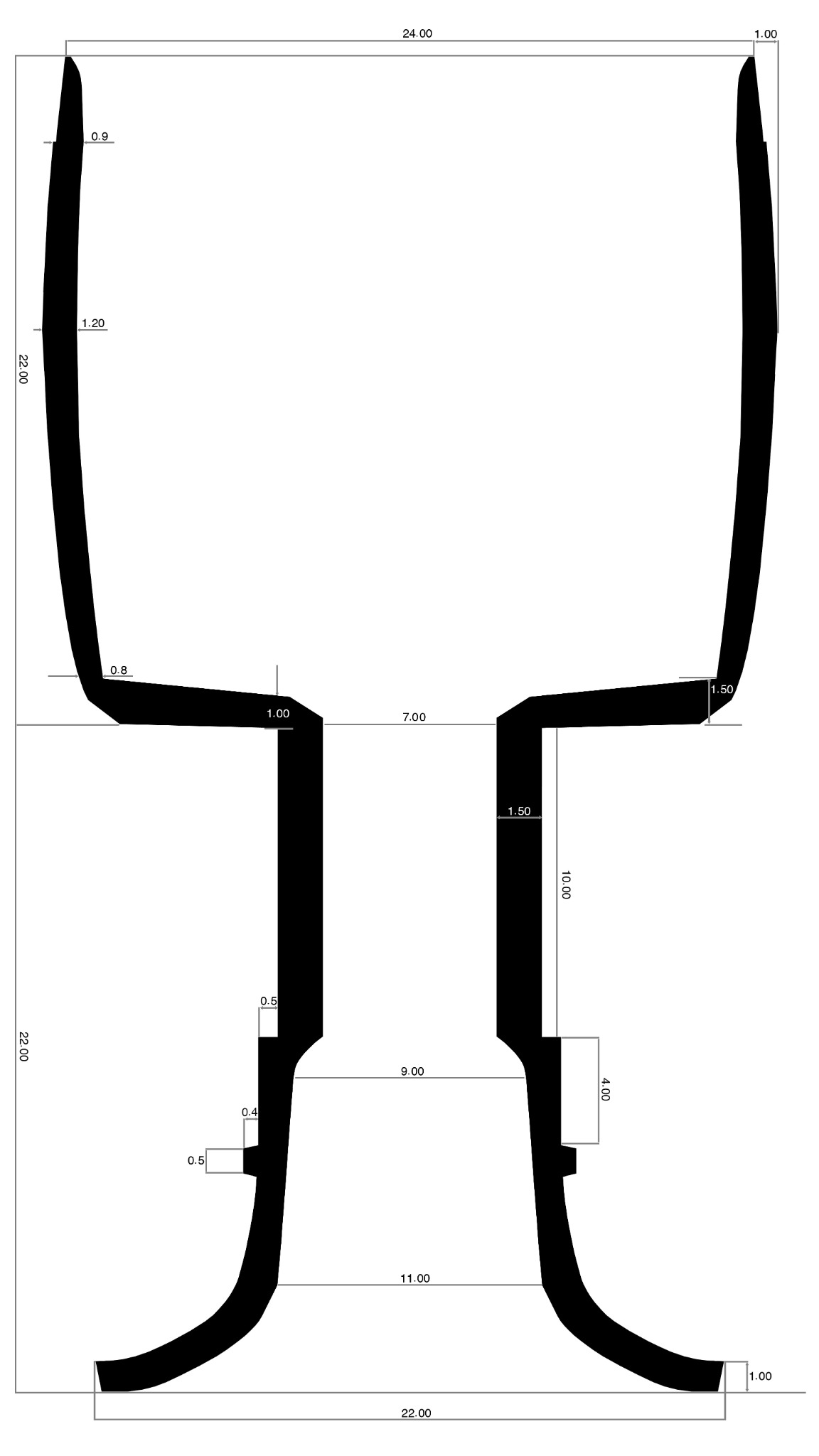
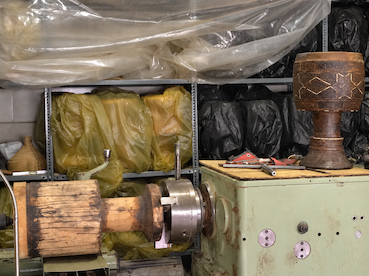
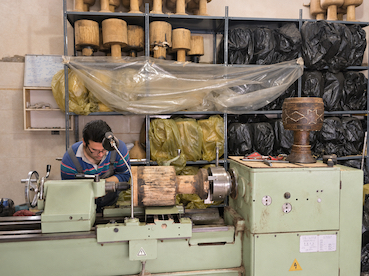
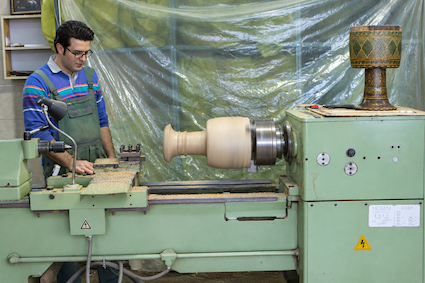
About twenty years ago, I decided to pursue the making of tombaks based on the designs of the old master craftsmen. Since making them myself was neither practically possible for me nor something I intended to undertake, I began looking for enthusiastic instrument makers willing to work from these models. I contacted several makers and provided them with examples, measurements and designs. I have never missed an opportunity to encourage people to make this kind of tombak. So far, apart from a few individuals who made only one or, at most, a handful of examples before abandoning the idea, Keyvan Taheri has shown the greatest interest and commitment. Two initial prototypes based on the instruments described above were made in his workshop between February and May 2015, during a demanding and intensive period of collaboration, undertaken with great motivation, enthusiasm and attention to detail. Fortunately, despite the many difficulties that arose along the way, he has continued making this type of tombak. At present, most of the tombaks made by Mr Taheri follow a different design. Nevertheless, a limited number of instruments based on my original model are still produced in his workshop for those interested, either at my request or as special orders under the designation of my model (for orders in Europe, please contact me here).
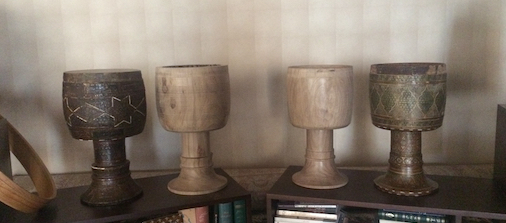
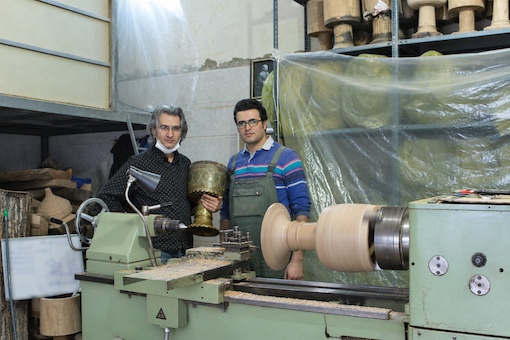
It seems to me that the tombak is the only Iranian musical instrument now made, for the most part, without reference to the designs of the old master craftsmen, or at least I have never encountered an old tombak resembling the forms commonly made today. Matters of taste and style aside, certain obvious errors in the physical construction of these instruments have also become widespread, which I find astonishing. The resonating chamber of modern tombaks is clearly built without regard for the very purpose it is meant to serve. The designs of old master-made tombaks, like those of other instruments, for example, the setars made by Master Farajollah or the tars made by Master Jafar, can be remarkable in their adherence to the principles of acoustics. As musicians deepen their understanding and develop their abilities, they tend increasingly to seek out instruments of this kind. It would be very difficult to persuade a contemporary tar player to replace the exceptionally thin skin on their instrument (the type known as barre-ye tudeli, or skin from an unborn lamb) with camel or calfskin, or to use a string of gauge 200 in place of gauge 20. Yet on many modern tombaks the vibrating membrane (the skin) is selected and mounted in such a way that it cannot respond properly to the force of strokes delivered by the human hand. Whatever slight vibration this produces is then stifled inside the body of the instrument rather than amplified by its resonating chamber.
Certain features of the contemporary style of tombak playing have also been shaped to a considerable extent by modern tombaks; the instruments and the way they are played have influenced each other. There is no doubt that human ingenuity and artistic sensitivity have refined and enriched both, and that they will continue to do so over the years. This is part of human nature. Nevertheless, I am among those who personally prefer that earlier sound, that earlier style of playing and, naturally, that earlier type of tombak. It is therefore only natural that I should do everything within my power to preserve and develop them.
Making a thin-walled tombak without a reinforcing rim, while observing all the principles of an old master craftsman's design, is by no means easy. Such an instrument requires considerably greater precision, more demanding procedures, more advanced techniques and much more time. Even so, I hope that increasing numbers of makers will take up the construction of these tombaks and that more and more musicians will choose to play them.
If you intend to make a tombak of this kind, please get in touch with me. I can provide examples, drawings, photographs and patterns of many such instruments, and I would be happy to share my experience. If you are interested in undertaking this work and believe I could be of any help, I will gladly and wholeheartedly offer whatever assistance I can, without any expectation of financial reward. All you need to do is send me an email using the contact information here.